Harold Bache RIP
To mark Albion's Remembrance Day fixture against Oxford United, Steve Carr recalls the all-too brief career of a player who could have been a Baggies legend .

It is mainly at this time of the year that we remember the likes of Harold Godfrey Bache, an Albion player who gave his life for his country during the Great War.
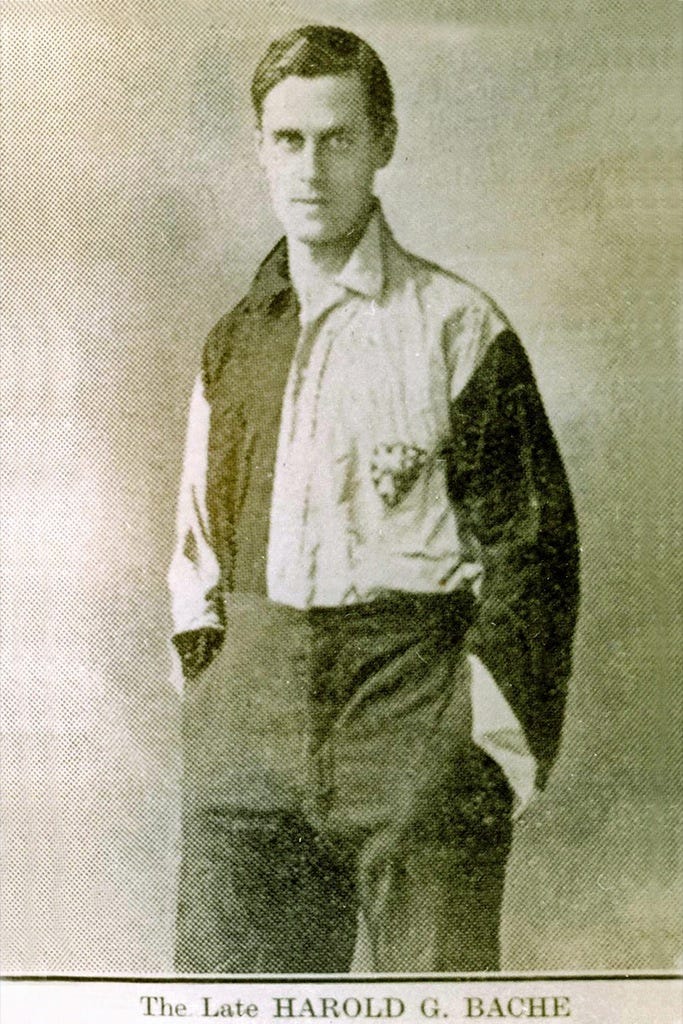
His Baggies career was sadly very brief, but his talent was evident from the outset, making his debut in an FA Cup tie at Villa Park in 1914 in front of over 57,000 spectators, which turned out to be his only first team appearance that season. He appeared more regularly in the 1914-15 campaign, making 14 further appearances and scoring 6 goals in League, FA Cup and the Lord Mayor of Birmingham Charity Cup, during breaks in his military training, before military service took him away from the club forever. His two goals in a 3-2 victory against Villa in the Charity Cup Final alone are sufficient for Bache to be granted cult hero status in my opinion!
Despite his short time with WBA, it seemed he had a wonderful career ahead of him, with descriptions such as ‘genius’ being regularly used. A clever dribbler, and somewhat unorthodox in his approach to playing, his colleagues in the forward line (which consisted of 5 players back then!) were not initially on the same wavelength as Bache, and needed time to adapt to the many openings he created. Bache regularly stole the show with his drive, vision and shooting ability, using his speed and eye for a good pass to good effect. After just 7 appearances he was called up to represent the Football League in the annual fixture against the Irish League, this time played at The Hawthorns. Albion scored 23 goals in Bache’s 12 League appearances that season, compared to just 26 goals in the other 26 games, which only serves to further emphasise his importance to the team in such a short space of time. He could well have gone on to be one of the club’s all-time greats, despite being classed as an ‘amateur’ for the purposes of sport (his profession by then was a teacher).
Although born in the Worcestershire village of Churchill he spent much of his early life living in West Bromwich, at Churchill House on High Street, being the son of William Bache, a well-known solicitor in the town, and founder of the company which bears the family name. Harold Bache was therefore very much ‘one of our own’. For me, it is not just the fact that Harold Bache was an Albion player that gives me cause to remember him at this time of the year. He was also a cricketer of note, representing my team, Worcestershire CCC, in addition to my own club, West Bromwich Dartmouth, and he is listed on memorials at The Hawthorns, New Road and Sandwell Park.
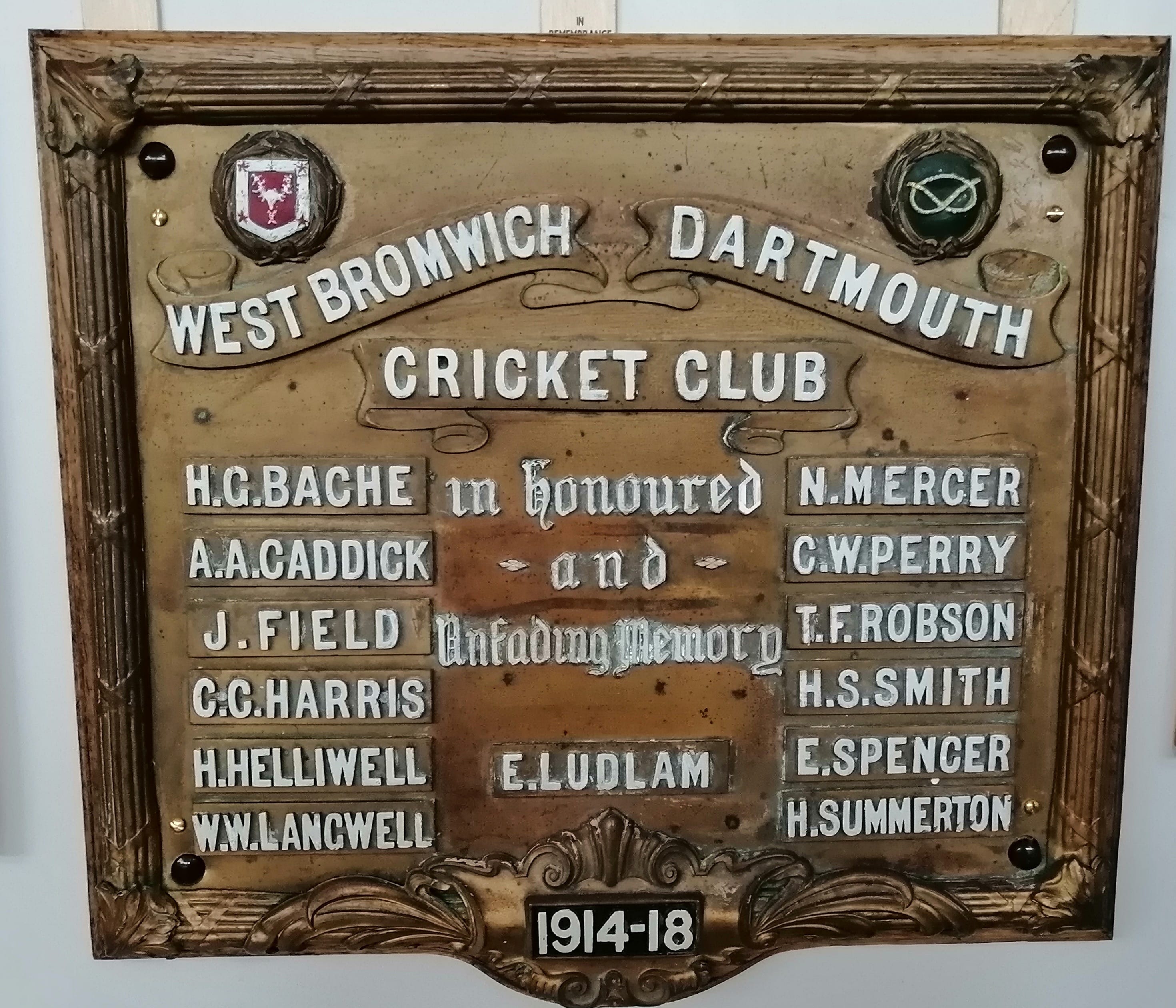
His 17 first class appearances for Worcestershire were spread over the 4 seasons 1907 to 1910, whilst his time at Dartmouth mainly centred around the 3 seasons 1906 to 1908, with occasional appearances in 1909 & 1910, in all making around 30 appearances in 1st & 2nd XI Birmingham League cricket. In both cases his availability was subject to the requirements of his studies and cricket engagements at King Edward School in Birmingham, then Cambridge University.
Harold was a talented sportsman in an era it was possible to excel in more than one sport - coming from a privileged background meant he had more opportunity than most to play sport, but there is no doubt he was a gifted individual. He represented Cambridge University at football, cricket, rugby union, hockey and lawn tennis, also appearing at the 1911 Wimbledon champions in the latter sport. In football he represented England at amateur level, as well as playing for the renowned amateur club Corinthian FC. Closer to home, he also appeared for West Bromwich Hockey Club, going on to play the sport at county level for Staffordshire.
Harold Bache came from a privileged background, but that came with a sense of duty, so it was no surprise that he was the first Albion player to enlist when war was declared. In due course, he was heavily involved in recruiting men to serve in the armed forces.
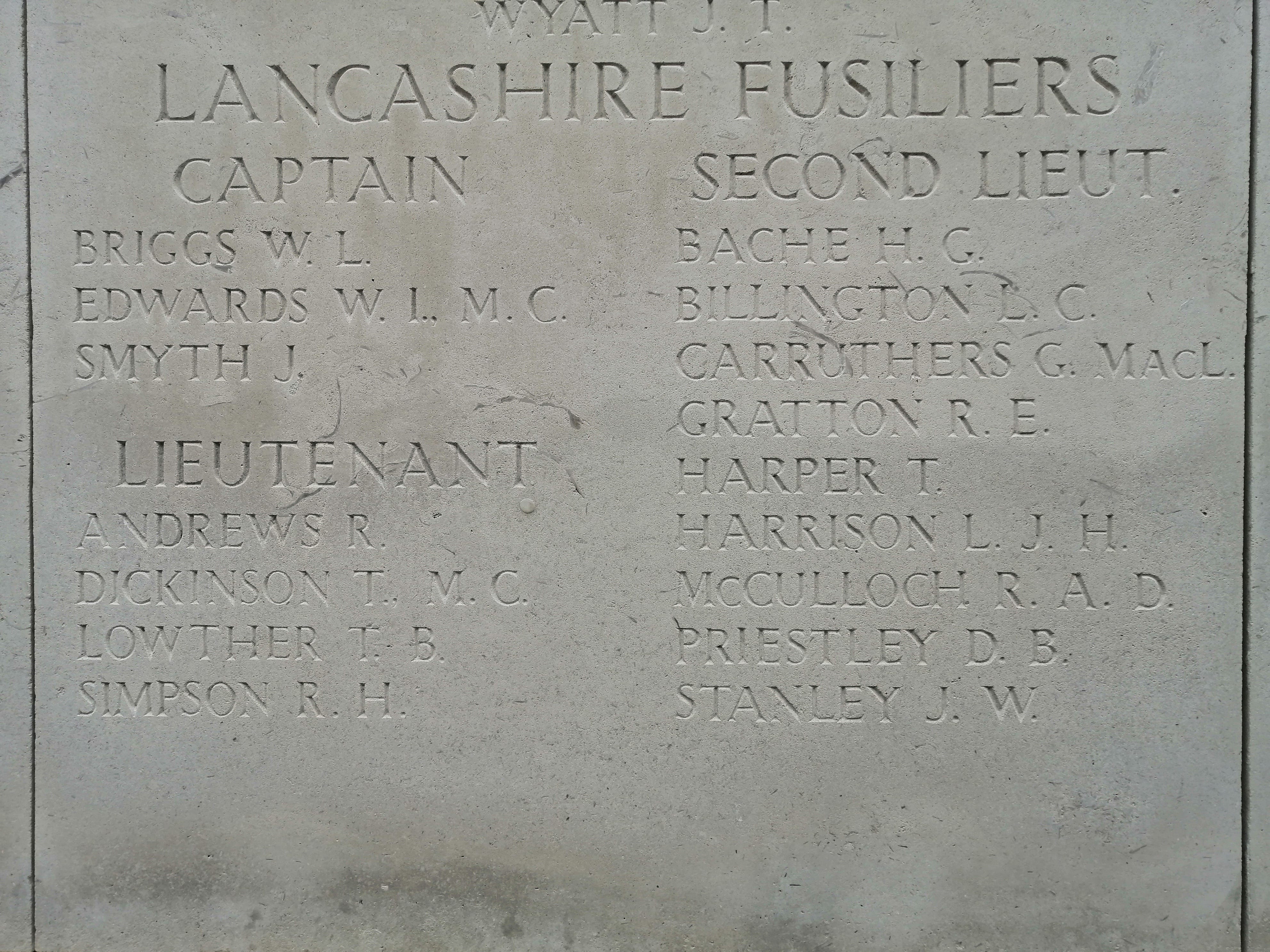
Second Lieutenant Harold Godfrey Bache was just 26 years old when he died fighting for the 10th Battalion of Lancashire Fusiliers in 1916. Some reports say that Harold fell to a sniper’s bullet at Comines Canal Bank, Ypres, Belgium, but his body was never recovered and he is therefore listed on the Menin Gate at Ypres (nowadays Ieper), which I recently visited. (For those of you interested in paying a visit to this wonderful memorial, Bache’s inscription is easily viewed on Panel 33).
Harold Bache was a product of a bygone age that we will never see again.